Perennial, or ‘wild’, rocket (Diplotaxis tenuifolia) is very popular now and increasingly likely to appear in your salad. For good reason – the flavour is nice and sharp and doesn’t get bitter, even in the older leaves. The leaves are more slender and deeply serrated than annual rocket, and don’t go limp soon after picking. Makes good pesto and in the second year is conveniently ready to harvest at the same time as wild garlic. Can harvest as cut and come again… and again the following year.
Sow enough plants so you will be able to pick sparingly and regularly from each one without weakening individual plants. Seeds are quite small. I plant around 4 seeds per module in a tray and then plant outside in their final home a few weeks later. The long summer days will trigger flowering. You can pick off the flowering stems to encourage more leafy growth or let them flower and collect the seed in Autumn.
Sea plantain (Plantago maritima) is the seaside cousin of ribwort plantain and a much nicer nibble. Though a coastal plant, it can be occasionally found inland at lake shores and mountains. It should grow fine in any free draining soil as its close relative staghorn plantain (P. coronopus), also a coastal plant, is cultivated by salad growers in many areas.
A native plant to Ireland, sea plantain typically flowers from June to September in the wild. When seed heads are ripe they can be cut and hung to dry upside down in a paper bag. Enough seed will fall out for you to replant again. Seed is tiny so difficult to separate from the chaff if you break up the dried flower heads.
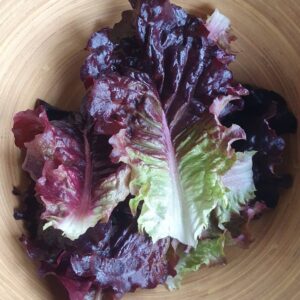
‘Apache’ is a very attractive lettuce (Lactuca sativa) with deep red crinkled leaves. It grows in a loose rosette and can be harvested as a cut and come again salad or by the whole head. It is suitable for growing all through the season.
Lettuce is best grown as transplants. Can be started off in modular trays from as early as January if you have a heated propagator (be careful to not let lettuce seed get above 23°C as the seed can go dormant then and not germinate). Sow seeds very shallowly or just sit on top of the compost and water gently. From spring no additional heat should be required.
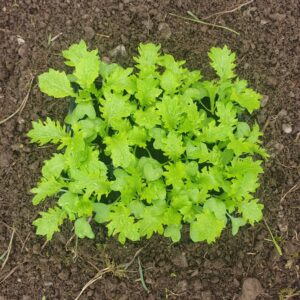
‘Wasabino’ is a variety of mustard (Brassica juncea) which has a gentle horseradish/wasabi flavour along with the usual spicy kick. Young leaves are light green, with serrated and wavy edges and are ideal baby leaf salad. Older leaves are tougher and better for stir frying. Very cold hardy so if you have a polytunnel you could grow it all year round.